

Hey everyone, and thanks for stopping by. Today, I want to get real about something we hear all the time here at the solids handling diesel pump supplier: “How hard is it really to install one of these pumps?” As someone who’s been deep in this space for years—talking to contractors, municipal maintenance teams, farm managers, and even disaster response crews—I’ve seen this question come up at every stage of a project. Let’s break this down, because the answer isn’t a simple yes or no; it depends on a bunch of factors, and I’m gonna keep this relatable, no stuffy industry jargon.
First off, let’s set the scene. Solids handling diesel pumps aren’t your average garden hose pump that you plug into a wall and go. These bad boys are built to move messy, tricky stuff—think sewage with solid waste, industrial slurry, muddy floodwater full of debris, or agricultural runoff with crop residue. Their job is heavy, so their installation isn’t just unboxing and flipping a switch. But is it impossible? Nope. Is it something a total beginner can handle on a Saturday? Probably not—unless you’ve got a basic grasp of mechanics and some patience.
Let’s start with the biggest variable that makes installation easier or way harder: the type of pump you’re working with. Not all solids handling diesel pumps are made the same, and that makes a huge difference. For example, if you’re dealing with a portable unit, like the Portable Engine Driven Pumps we stock, those are designed for quick setups. You basically just unload it from the truck, level it on a solid, flat surface (gravel or concrete works—no soft mud where it can tip), hook up a discharge hose, and prime it. We’ve had customers use these for emergency flood cleanup in a matter of hours because the setup is that straightforward. But if you’re going for a larger, permanent installation—like a big pump station for a wastewater plant—things get way more complex, and that’s where the difficulty ramps up fast.
Another key factor is site prep. You can’t plop a pump down anywhere and expect it to run smoothly. Let’s say you’re installing a pump for a construction site’s dewatering needs. You’ve got to think about how the pump is going to access the liquid—so you might need to dig a sump pit, or lay a suction line that’s airtight. If there’s any air leaking in the suction side, the pump will cavitate, which basically means it’s pumping empty space instead of liquid, and that damages the impeller fast. Then there’s power? Wait no, these are diesel, so power isn’t an issue, but fuel access—you need to have a diesel supply line or a place to refuel the tank without shutting down the pump mid-job. And let’s not forget about safety: if you’re dealing with hazardous solids (like in industrial slurry), you might need containment areas, ventilation, or even lockout/tagout procedures that take time to set up.
Wait, and let’s talk about self-priming vs. non-self-priming pumps, because that’s a game-changer for installation ease. Self-priming units, like our Open Rack Self-priming Pump Truck or Self-priming Sewage Pump Trailer, don’t require you to manually fill the pump casing with liquid every time you start it. That’s a huge win—no more lugging buckets of water to prime it, which is a total pain, especially if you’re working in a remote area. Non-self-priming pumps, though, need a priming system (like a primer pump or foot valve) and careful setup to make sure the suction line stays full. If you skip that part, the pump won’t work at all, and you’ll be troubleshooting for hours. I’ve seen first-hand a guy who tried to save time by skipping the foot valve on a non-self-priming pump, and ended up losing half a day because the line kept sucking air. That’s the kind of small mistake that makes installation way harder than it needs to be.
Now, let’s get into some common hurdles that even experienced folks run into. One big one is pipe sizing and routing. If your suction pipe is too small, it creates friction loss, which means the pump has to work harder, and you might not get the flow rate you need. If the discharge pipe is too long or has too many bends, that also cuts into performance, and sometimes even makes the pump stall. A lot of people underestimate how important it is to calculate those pipe specs before they start installing. We always tell our customers to check the pump’s performance curve—we send that with every unit—and size their pipe accordingly, but not everyone does that, and that leads to frustration during installation.
Then there’s electrical and mechanical connections? Wait, no, diesel pumps have engines, so it’s mechanical connections, plus fuel lines, exhaust, and maybe controls. The exhaust line is super important—if you don’t route it properly away from the work area, you’re exposing everyone to carbon monoxide, which is a serious safety hazard. We always include clear instructions for exhaust routing, but I know a team that tried to bend the exhaust too tight to save space, and ended up with backpressure that made the engine run rough, so they had to redo that part. It’s not a hard step, but it’s easy to rush through when you’re in a pinch.
What about if you’re dealing with a larger pump, like the Large Flow Drainage Pump Truck, which is made for big jobs like mining dewatering or large-scale flood control? That installation is a whole other animal. These units are heavy—we’re talking thousands of pounds—so you need heavy-duty lifting equipment (a crane or forklift) to position them. You can’t just roll them into place; you have to level them precisely, because if the pump isn’t level, it puts strain on the bearings, leading to early wear and breakdowns. And the pipework for these big units is way more complex—you might have multiple suction lines, larger diameter pipes, and even controls that need to be wired to a central system. That’s not something you can do with a few wrenches and a buddy; you might need a licensed mechanic or plumber to help, which adds to the time and cost.
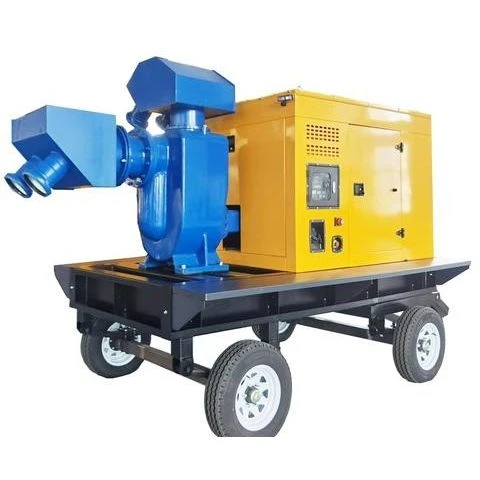

But here’s the thing: even with the difficulties, most installations are manageable if you plan ahead and use the right tools. We’ve had a lot of first-time buyers come to us nervous about installing their pump, especially if it’s for a specific job like farm irrigation. If they go with an Irrigation Trailer, which is built for agricultural use, the setup is designed for people who might not be certified pump installers. The trailer comes pre-plumbed sometimes, so you just hook it up to your existing water source and irrigation lines, level it, and go. We also include a step-by-step guide with every pump, plus video tutorials on our site—trust me, those help. I’ve had a farm owner call us at 5 PM panicking because his pump wasn’t working, and we walked him through checking the suction line for air leaks over the phone, and he fixed it in 10 minutes. That’s the kind of support we provide, because we know no one wants to be stuck with a pump that won’t run when they need it.
Another point: regular maintenance is tied into installation difficulty, but wait, the question is about installing, not maintaining. But when you’re setting it up, if you design it with future maintenance in mind, it makes things easier. Like, if you leave enough space around the pump to get to the impeller or filters, you won’t have to rip out pipework every time you need to service it. That’s a small planning step that avoids big headaches later, which people often overlook during the initial install.
Let’s talk about when installation is the most difficult. If you’re working in a remote location—like a mine site out in the desert, or a rural area with no heavy equipment access—things get tricky fast. Unloading the pump, getting it to the site, leveling it, and routing pipe through rough terrain takes way more time and effort than doing it on a flat, accessible lot. But even then, if you go with a portable or trailer-mounted unit, like the ones we mentioned, it’s way easier than a fixed, large pump station. We’ve even shipped smaller diesel pumps to disaster zones with mud and limited access, and our customers have been able to get them set up with basic tools because they’re designed to be field-ready.
Wait, let’s address a common myth: “I can install this myself, no problem.” Sure, if you’ve got mechanical experience, the right tools, and you’re not in a rush, you can install a lot of our smaller to mid-sized solids handling diesel pumps. But if you’re working on a big, complex project, or you’re not comfortable with things like pipe sizing, air leaks, or engine setup, it’s worth hiring a professional. The cost of a pro is way less than the cost of messing up the installation and damaging the pump, or having it fail when you need it most. I’ve seen a guy try to install a 4-inch solids handling pump by himself, skip priming it, and burn out the impeller in an hour—he had to pay for a new impeller, plus downtime on his project, which was way more than what a pro would have charged.
So to wrap this up, how difficult is it to install a solids handling diesel pump? It’s not as hard as you think for smaller, portable or trailer-mounted units—think a 4/10 on a difficulty scale. But for large, fixed, industrial units, it’s way more involved, maybe a 7/10, and that’s with planning and the right help. The biggest factors are: pump type (portable vs. fixed), site prep, whether it’s self-priming, and your own mechanical skill. The good news is that we make these pumps to be as install-friendly as possible, with clear guides, support, and options for every job size.
If you’re in the market for a solids handling diesel pump, or you’re curious about which unit would work best for your project—whether it’s flood cleanup, agriculture, construction, or industrial use—we’re here to help. Reach out to our team to discuss your needs, and we can walk you through the installation process, answer any questions, and make sure you get the right pump for the job.
References:
- Hydraulic Institute. (2021). Pump Installation Best Practices for Solids Handling Applications.
- American Society of Mechanical Engineers (ASME). (2020). Standard for the Installation of Centrifugal Pumps.
- National Water Association. (2022). Guide to Installing Self-Priming Diesel Pumps for Dewatering.
- Occupational Safety and Health Administration (OSHA). (2021). Carbon Monoxide Safety for Engine-Driven Pump Installations.


