
Ocean Pumps - Knowledge Base
How to Prime a Centrifugal Pump (and Why It Won't Self-Prime)
A standard centrifugal pump cannot pump air. If the suction line is full of air when the pump starts, the impeller just spins air and moves no water. "Priming" means replacing that air with water before start-up - and there are three practical ways to do it.
1. Why centrifugal pumps don't self-prime
Centrifugal impellers create head by throwing liquid outward. Air is a thousand times lighter than water, so the impeller cannot build the suction needed to lift a liquid column. That is why any end-suction or close-coupled pump installed above the water level must be primed - and why self-priming pumps are a different, special design.
2. Three ways to prime
| Method | How it works | Best for |
|---|---|---|
| Flooded suction | Install the pump below the water level so water flows in by gravity - no priming needed at all. | Most reliable; ideal where layout allows. |
| Foot valve + manual/automatic filling | A check valve at the bottom of the suction line keeps water in the pipe; the pump is filled via a priming plug or a small water supply. | Small pumps, occasional start-up, low suction lift. |
| Vacuum priming system | A separate vacuum pump evacuates the air from the pump casing and suction line until water rises in - then the main pump starts automatically. | Large end-suction pumps, automatic stations, fire and irrigation duty. |
3. How a twin-piston vacuum priming system works
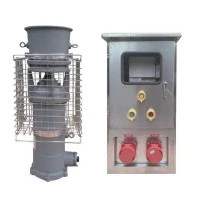
Ocean Pumps supplies a horizontal twin-piston reciprocating priming unit for large end-suction pumps. Two pistons reciprocate to draw air out of the pump casing and suction piping, creating a vacuum that lifts water from the source. When the system senses water (and the main pump builds pressure), the priming unit stops and the duty pump takes over. Control is automatic or manual from the panel.
- Priming speed: typically completes within 24 seconds at a 7 m suction lift under standard conditions;
- Max suction lift: about 7.5 m at sea level (less at altitude, like any suction design);
- Control: automatic/manual modes on the control cabinet;
- Typical fit: municipal booster stations, irrigation intakes, fire pump rooms with below-level water sources.
4. Priming checklist
- Keep suction piping short, straight and airtight - air leaks are the number one priming failure;
- Check the foot valve / strainer is clean and sealing;
- Verify the vacuum pump oil level and rotation direction before first use;
- On automatic stations, test the vacuum-cycle sequence monthly.
Ocean Pumps - www.oceanpumps.com
Knowledge Base · Technical Basics